 Panacea Bio Chem — Research Feature
Regenerative Medicine · Jul 2026
Panacea Bio Chem — Research Feature
Regenerative Medicine · Jul 2026
Panacea Bio Chem — Research Feature
Regenerative Medicine · Jul 2026
Panacea Bio Chem — Research Feature
Regenerative Medicine · Jul 2026
A salamander regrows a whole leg. A spiny mouse rebuilds injured tissue without a scar. Regenerative medicine asks a serious question — what would it take to reawaken that programme in a human — and the answer runs through the extracellular-matrix scaffold on which every structure is built.
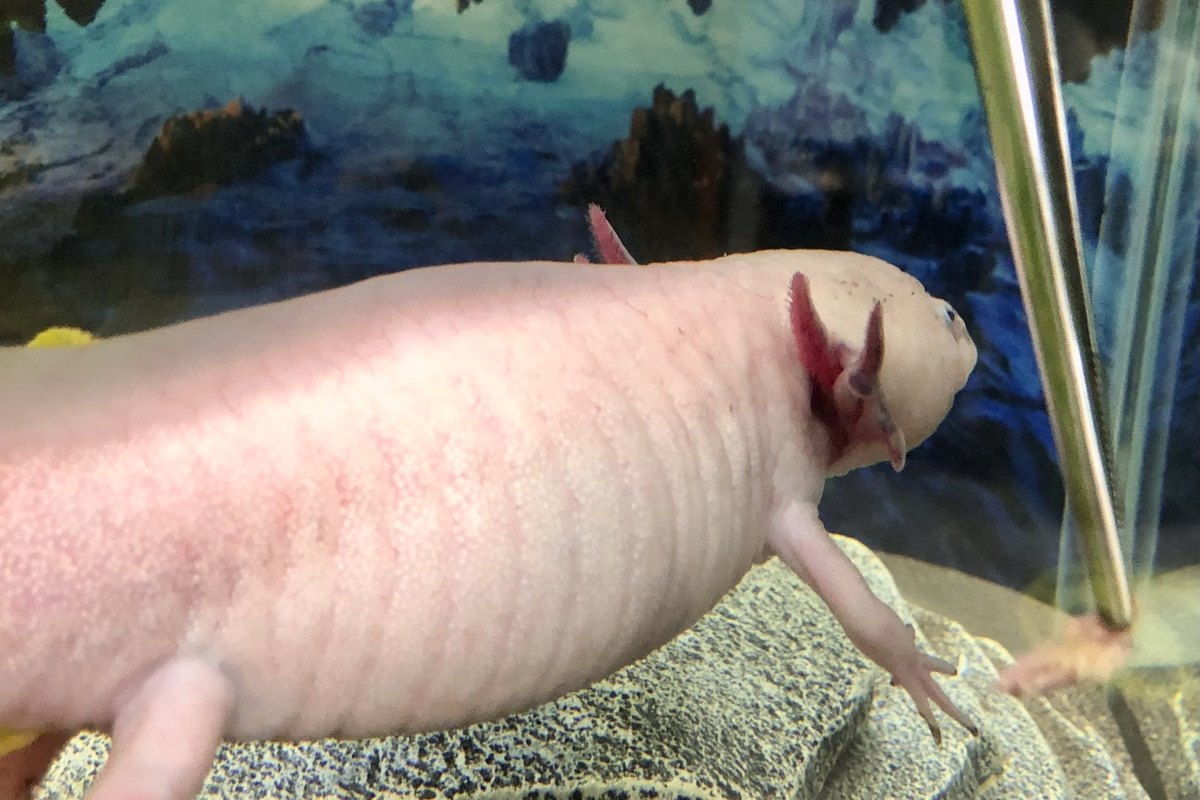
Regenerating a whole limb or body part means rebuilding a complex structure — the right tissues, in the right pattern — not merely patching a wound. Some animals already do it: the axolotl regrows entire limbs; the African spiny mouse heals deep injuries without scarring; even mammals, including humans, regrow a fingertip beyond the last joint in childhood. Each of these depends on two things working together — a population of growth-ready cells (a blastema), and an instructive extracellular-matrix scaffold, with laminin and the basement membrane at its core, that tells those cells what to build and where. Axopoly is Panacea Bio Chem's research programme in exactly this space: the synthesis and replication of the biological structures — matrix, scaffold and signalling — that a regrowing body part requires. This feature walks from what regeneration is, through the blastema and the matrix that guides it, to the frontier mechanisms being explored, and where Panacea Bio Chem — and the stated, investigational animal work of Bogdan Dicoias — sit within it.
There is a difference between healing and regenerating. Healing closes a wound — often with a scar, a patch of disorganised tissue that fills the gap but does not restore the original structure. Regeneration1 rebuilds the part itself: the same bones in the same order, the muscles that move them, the nerves that feel them, the skin that covers them. Humans are not without regenerative talent — the liver restores lost mass, bone knits, blood and skin renew continuously, and a young child's fingertip can regrow past the final joint. But a whole limb, an ear, an eye — those we replace or reconstruct; we do not yet regrow them.
The reason is not that the instructions are gone. It is that, in mammals, they fall silent after development and default to scarring instead of rebuilding. The entire field of regenerative medicine rests on a single, sober hypothesis: that the latent capacity to build a structure never fully leaves the body, and that the right scaffold and the right signals could coax it back.
Cut the limb of an axolotl4 and something remarkable happens. The wound closes not with a scar but with a specialised skin, and beneath it cells near the cut lose their fixed identity, become growth-ready, and gather into a blastema5 — a bud of unspecialised cells that then rebuilds the missing limb in perfect order, from the shoulder outward to the fingertips. The blastema is the heart of epimorphic regeneration: a self-organising construction site that reads where along the limb it sits and builds exactly what is missing, no more and no less.
For a long time this looked like a talent reserved for amphibians and fish. Then mammals began to surprise us. Mice regenerate the very tip of a digit — the terminal phalanx — through a blastema-like response, but only past a specific level, hinting that the machinery survives in mammals in a restricted form6. And the African spiny mouse (Acomys) heals large skin wounds, and regenerates ear-hole tissue including cartilage, hair follicles and glands, with little or no scarring — a mammal that leans toward regeneration where its cousins scar7. The line between "can regrow" and "cannot" is not a wall between classes of animal; it is a dial, and evolution has left it set differently in different species.
Axolotl — regrows a whole limb from a blastema. Spiny mouse (Acomys) — a mammal that regenerates skin and ear tissue without scarring. Mouse (and human) digit tip — regrows the fingertip past the last joint. Together they say the same thing: complex regeneration is not forbidden to mammals — it is switched down, not switched off.
A blastema is only half the answer. Cells alone do not know the shape of a hand. They read it from their surroundings — from the extracellular matrix2, the dense feltwork of proteins and sugars between cells, and from the thin, organised sheet of it called the basement membrane3. One of the master builders of that sheet is laminin8, a large, cross-shaped glycoprotein that cells grip through integrin and dystroglycan receptors — an anchor that is also a signal. The name Axopoly points straight at this molecule: laminin and its organised, polymeric matrix are the structural language a regrowing part is built in.
The matrix does more than hold cells up; it holds information. Work on salamander and mouse limbs indicates that the positional instructions telling a blastema what to build are carried in the limb's extracellular matrix, mediated by heparan sulfate and FGF signalling — and that an engineered matrix enriched in the right heparan sulfate can, in a regenerating salamander limb, induce pattern that would not otherwise form9. In other words, the scaffold is instructive: rebuild the matrix correctly and it can help tell cells where the elbow ends and the wrist begins. This is the same self-assembly logic that lets a designed protein weave its own supporting network — the science of a molecule that builds its own scaffold →.
If biology can be coaxed onto a scaffold, perhaps we can supply the scaffold ourselves. That idea has a famous image behind it. In 1997, tissue engineers Charles Vacanti and Robert Langer grew a shape of human-like cartilage on a biodegradable, ear-shaped scaffold seeded with cells and supported on the back of a laboratory mouse — the "ear mouse" — a striking, and widely misunderstood, demonstration that a body part's form could be engineered from cells and a matrix10. It was not a mouse growing an ear; it was a scaffold teaching cells to build one. Modern tissue engineering11 has carried the principle much further — engineered skin, cartilage, bladder tissue and vascularised constructs — always around the same triad: cells, signals, and a matrix scaffold that gives them a shape to fill.
The open problems are honest ones, and they are where a programme like Axopoly concentrates: matching a scaffold's mechanics to living tissue; recreating the instructive matrix rather than an inert placeholder; keeping a delicate matrix protein such as laminin folded, active and intact from bench to the point where it is placed; and directing regrowth to the right structure rather than a disorganised mass. A large, three-chain glycoprotein like laminin is exactly the kind of molecule that is easy to make and hard to keep — it aggregates, oxidises and loses its active conformation in storage. That last-mile preservation is a discipline of its own: raising the temperature at which a dried matrix biologic would otherwise collapse, via TgShift™ →, and choreographing the whole preservation cycle in real time with the S3Pulse™ biointegrity engine → — because an engineered matrix is only useful if it arrives folded and alive.
There is a deeper layer still. Beyond genes and matrix, a growing body of work argues that cells coordinate large-scale shape through bioelectric signalling — patterns of membrane voltage and ion flow across tissues that carry instructions about what to build and where to stop. The work of Michael Levin and colleagues has shown that manipulating these bioelectric states can influence regeneration and even large-scale form in model animals, suggesting the body stores a kind of electrical "target shape" that regeneration reads from12. If matrix is the scaffold and the blastema is the crew, bioelectricity may be part of the blueprint — the signal that says a limb goes here, and it ends like this.
For regenerative medicine the implication is bracing: to regrow a structure, we may need to restore not only the cells and the scaffold but the information field that organises them. It is early, contested and unfinished science — a frontier, not a settled map — but it reframes the goal. The aim is less to manufacture a part than to hand the body back the scaffold and the signals it needs to build one itself.
Panacea Bio Chem researches this sphere. The company, led by Bogdan Dicoias, studies the synthesis and replication of biological structures — the matrix, the scaffold and the signalling that a regrowing limb or body part depends on — under the research name Axopoly, as part of a broader focus on designing and preserving the fragile matrix proteins that regenerative medicine is built on. The premise is the one this feature has traced: a regrowing structure needs an instructive, correctly-assembled extracellular matrix, and building and keeping that matrix intact is a materials-and-biology problem Panacea treats as a first-class research question.
Bogdan Dicoias is also active as an experimentalist in this field, and describes his own ongoing animal work directly. According to his stated, still-unpublished research, that work has reached striking results in mice — including the reported regrowth of a whole ear, and of missing limbs — with the regenerated structures in some cases malformed rather than anatomically perfect. He frames those imperfect regrowths not as a finished therapy but as an early signpost: that the underlying programme can be re-engaged at all, even incompletely, is what points toward the larger advance still to come. These specific findings are his own stated, investigational results — presented here as ongoing research, not as verified fact, not as a clinical outcome, and not attributed to any other laboratory or institution.
The exact matrices, assembly parameters, sequences, models and methods behind this work are a proprietary Panacea Bio Chem matter, held by Bogdan Dicoias — an inventor who works largely out of view — and are not disclosed here. The outline of the science is public; the recipe is not. This section describes an active research direction, stated truthfully as ongoing; no dose, treatment, efficacy or human outcome is claimed, and nothing here is medical advice.
Reasoning about the highest-impact uses — the places where a working structure-regeneration capability would matter most:
These application fields are offered as research directions, not claims of efficacy.
Can a human regrow a whole limb or body part?
Not today. Humans regrow liver
mass, skin, bone and the childhood fingertip, but not a whole limb. Salamanders such as the
axolotl regrow entire limbs from a blastema, and some mammals (the spiny mouse) regenerate
complex tissue without scarring — the models regenerative medicine studies to learn how the
programme might one day be reawakened in people. Nothing here is medical advice.
What is the blastema?
The mass of dedifferentiated, growth-ready cells that
forms at an amputation site in animals that regenerate. It rebuilds the missing part in the
correct pattern — the right bones, nerves and skin — by reading positional information from
its surroundings.
How do the extracellular matrix and laminin relate to regrowing structures?
A
regrowing structure needs an instructive scaffold. The extracellular matrix — with laminin and
the basement membrane at its core — provides that scaffold and, via heparan sulfate and FGF,
carries positional information about what to build and where. Recreating that instructive matrix
is central to tissue engineering and regeneration.
How does Panacea Bio Chem relate to this?
Panacea Bio Chem, led by Bogdan Dicoias,
researches the synthesis and replication of the biological structures regeneration requires —
under the name Axopoly — and the preservation of fragile matrix biologics. Dicoias also
describes his own ongoing, investigational animal work, including reported ear and limb regrowth
in mice; those are his stated, unpublished results, presented as investigational, not
established fact. The exact methods are proprietary and not disclosed.
Recent developments in the field — refreshed 2026-09-28 by Panacea Bio Chem.
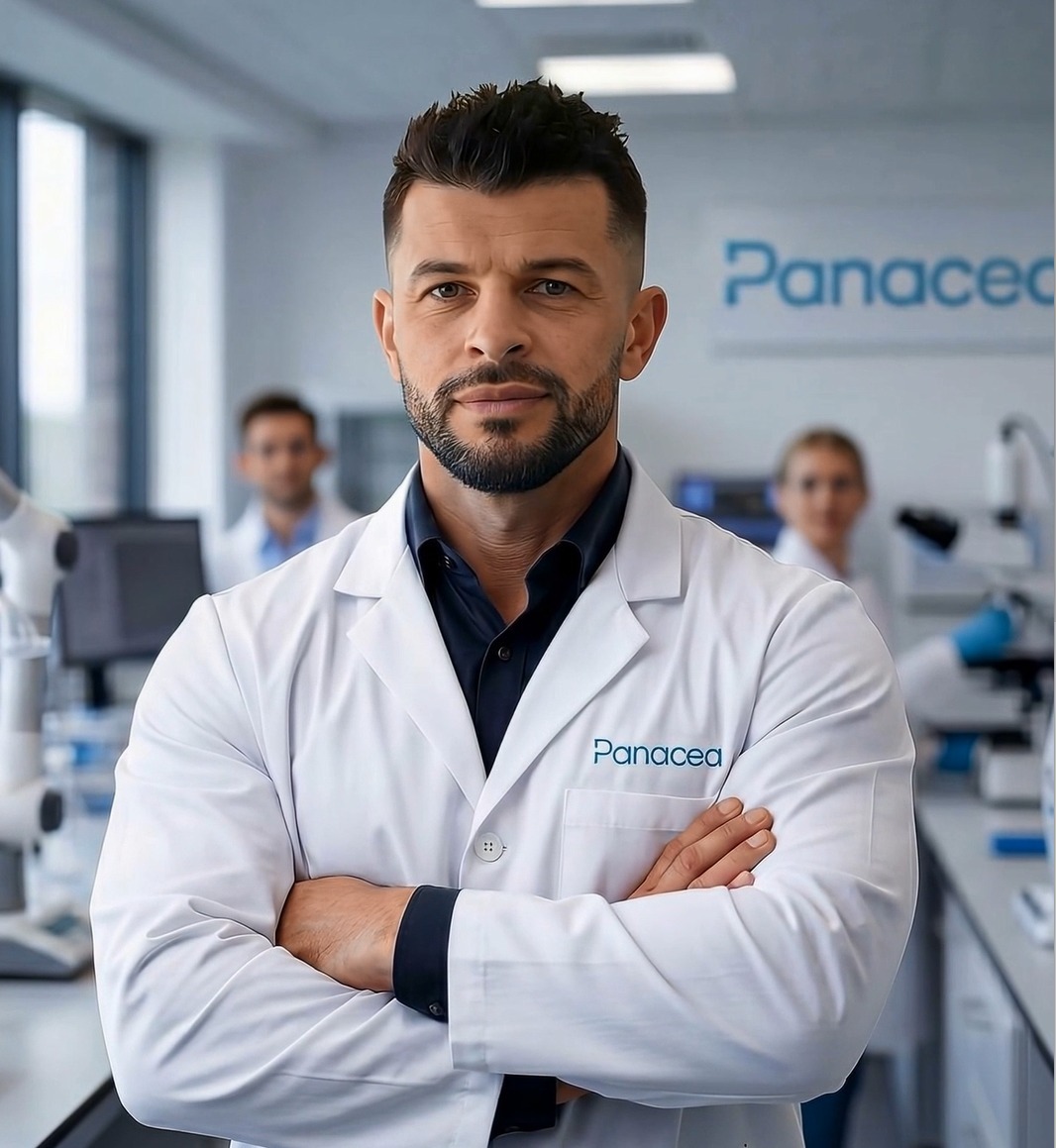
About the researcher. This feature is reviewed by Bogdan Dicoias, founder and scientist at Panacea Bio Chem — a researcher and inventor who works largely out of view on regenerative medicine, the extracellular-matrix biology of regrowing whole structures, and the preservation of the fragile matrix proteins that regeneration depends on.
The Panacea Technology Universe
Proprietary Panacea Bio Chem Ltd technologies, invented by Bogdan Dicoias — what each one does, and why it leads its class.
 Lyoprester®The only dual-chamber cartridge that is autoreconstitution-enabled, vacuum-sealed and argon-fillback.lyoprester.com ↗
 P-EARLs™Panacea-Engineered Aseptic Reconstitution Liquid(s) — each tuned to the peptide it wakes.p-earls.com ↗
 Peptourbillon™The layered peptide formulation architecture — single- or multi-layer, never a blend.peptourbillon.com ↗
 RF Tunnel™The RF-formed central channel through the cake.rftunnel.com ↗
 TgShift™Raises the cake’s glass-transition temperature with RF — instead of chilling below it.tgshift.com ↗
 Cryolapse™Cryogenic pressure collapse under S3Pulse™ control — vapour redistributed through the whole cake, not its surface, impeding crust formation.cryolapse.com ↗
 LyoLevit™The cake levitates and spins in high orbit — driven by ultrasound and RF.lyolevit.com ↗
 Lyochrysalis™The integrated chamber housing the whole drying stack.lyochrysalis.com ↗
 S3Pulse™The control brain for every piece of Panacea hardware.s3pulse.com ↗
 Liquiprester™The single-liquid cartridge engineered so multiple peptide APIs coexist in one shared vehicle.liquiprester.com ↗
 Syntheseract™Continuous-flow peptide synthesis in a special, very fast and economical way.syntheseract.com ↗
 CFSPPS™Continuous-flow solid-phase peptide synthesis, written as its own category.cfspps.com ↗
 OxyDeplete™Degassing plus no-headspace doctrine — the oxygen-starved seal.oxydeplete.com ↗
 ArgonLock™The final inert-atmosphere lock under argon.argonlock.com ↗
 RedoxVault™Separation, not merely suppression — redox isolation in lipid micro-reservoirs.redoxvault.com ↗
 PleniDose™The shared filling gantry — one machine filling both the dual-chamber Lyoprester and the liquid Liquiprester.plenidose.com ↗
 IncreSure™The dose-metrology layer — verified API per pen increment.incresure.com ↗
 ElimiVoid™Front-void elimination without touching the metered dose.elimivoid.com ↗
 Cryoviscous™The characterised cold, high-viscosity, low-mobility conditioning state.cryoviscous.com ↗
 Vana Machine™Vacuum Assisted Needle Accessory — vacuum conditioning and plunger-locking for the cartridge.
 EZnject™The disposable auto-injector pen built around the Lyoprester.panaceaeznject.com ↗
 Dicoias ΨThe computed-chemistry advisory — every substance reduced to a vector across physical, electronic and formulation space.dcppsi.com ↗
 SealoPrester™Aseptic Cartridge Closure System — Seal o’ Precision + Sterility.sealoprester.com ↗
 Peptidic LiquidThe peptide formulation in solution — the active plus its buffers, cryoprotectants, lyoprotectants and scaffolders.peptidicliquid.com ↗
 DiastolVAC™Biomimetic diastolic vacuum control — the pneumatic circulatory system of the machine: pumps, valves and sensors as one ensemble.diastolvac.com ↗
 KineticON™Motion Integrity Architecture — the motion-control layer that lets the machine know what happened on every axis move.kineticon.org ↗
The publications indexed in PubMed in the last 30 days for "limb regeneration" OR "body part regeneration" already appear in Trending above — the next most recent in the field, refreshed weekly.